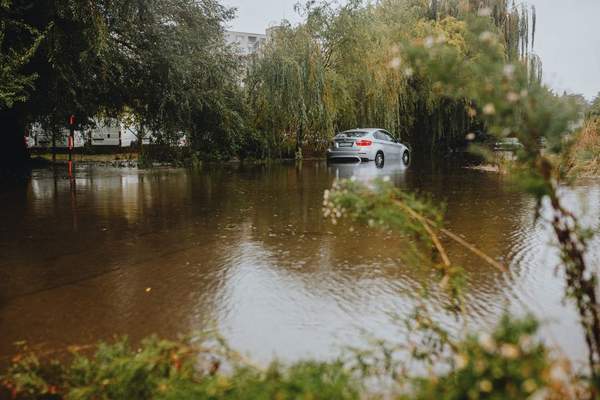
Flood damage can be easy to hide and expensive to uncover later. A vehicle may be cleaned, deodorized, and polished until it looks normal while moisture and corrosion remain inside wiring connectors, control modules, seat mechanisms, or other hidden areas. Checking a used car for flood damage therefore requires more than a quick walk-around.
Look for several clues that tell the same story. One musty smell or rusty bolt may be harmless, but unusual odors, fresh carpet, hidden silt, electrical glitches, and a suspicious title history together deserve attention.
Start With the Smell, but Do Not Trust It Alone
Open the doors and trunk before the car has been running with the climate control on. A persistent musty, moldy, or damp odor can point to past water exposure. An overpowering air freshener, disinfectant, or recently shampooed interior can also be worth questioning because strong cleaning smells may be used to cover mildew.
Check the trunk, spare-tire well, under the floor mats, and beneath the seats. These enclosed areas can retain odors longer than the visible cabin. If the seller has recently replaced only part of the carpet or upholstery, ask why.
Look Below the Surfaces for Flood Car Signs
A flood damaged car may look clean at eye level, so inspect places that are inconvenient to detail. Slide the front seats forward and backward. Use a flashlight to look at seat rails, mounting bolts, wiring plugs, and the underside of the seats. Check under the dashboard and around lower panels for dried mud, sand, silt, or a faint water line.
Pull the seatbelt out to its full length and inspect the webbing for staining, mildew, or debris. Then look in the glove box, trunk corners, spare-tire compartment, and around the jack or tool kit. Dirt trapped high inside the cabin is more suspicious than normal road grime underneath the car.
Compare Rust With the Car’s Age and Location
Some surface rust is normal, especially on vehicles from areas that use road salt. What matters is rust where water would not usually collect. Corrosion on interior screws, seat hardware, electrical brackets, or metal under the dashboard can be a stronger warning sign than ordinary rust on exhaust components.
Also inspect visible electrical connectors for greenish or whitish corrosion. Do not unplug safety-related connectors yourself. If you see suspicious corrosion near wiring, note it for a professional inspection.
Check Lights, Electronics, and Warning Systems
Water and electronics are a costly combination because faults may appear long after the cabin dries. Turn the ignition on and confirm dashboard warning lights illuminate during the normal self-check, then go out as expected after the engine starts. Test the windows, locks, mirrors, horn, infotainment system, cameras, power seats, climate controls, and exterior lights.
Watch for intermittent behavior rather than only complete failure. A window that moves slowly, a speaker that cuts out, unexplained warning messages, flickering lights, or several unrelated electrical faults can suggest vehicle moisture damage. These symptoms can have other causes, but several unrelated electrical issues deserve investigation.
Inspect the Engine Bay and Fluids Carefully
Look around the engine bay for dried silt, unusual dirt lines, or corrosion in protected areas. Check the fuse-box area and visible connectors without opening sealed electronic components. A very clean engine bay on an older used car is not proof of anything, but it should make you look more closely for inconsistencies.
Fluid appearance can sometimes reveal contamination, but it is not a reliable flood test by itself. Milky engine oil, cloudy fluids, or signs of water contamination require professional attention and can also result from mechanical problems unrelated to flooding.
Check the VIN, Title History, and Insurance Records
A physical inspection should be paired with a history check. In the United States, the National Motor Vehicle Title Information System can show state title information and brand history such as salvage or flood branding when reported. The National Insurance Crime Bureau also offers VINCheck, which can flag certain theft, salvage, or flood records reported by participating insurers.
Do not treat a clean report as a guarantee. Not every water damage car will appear in every database, and title-branding rules and reporting circumstances vary. Title washing can also involve moving a damaged vehicle between jurisdictions in an attempt to hide its history. Compare the VIN on the dashboard, door label, title, and paperwork, and investigate any mismatch.
Use a Simple Real-World Test Before You Buy
Imagine inspecting a six-year-old sedan after a major storm season. The interior smells strongly of cleaner, the carpet looks newer than the seats, two seat-rail bolts have orange corrosion, and fine silt is sitting in the spare-tire well. The seller says the car was only detailed. None of those clues alone proves flooding, but together they justify stopping the purchase until an independent mechanic inspects the car and the title history is verified.
A useful rule is to avoid explaining away several suspicious details one at a time. Patterns matter.
Get an Independent Pre-Purchase Inspection
If you still like the vehicle, arrange an inspection with a qualified mechanic or repair facility that is independent of the seller. Tell the technician you specifically want the car checked for previous water intrusion. A professional can inspect areas you may not safely access and can use diagnostic equipment to look for stored faults or communication problems between electronic modules.
Hidden corrosion can continue developing after a car appears dry, turning a small saving at purchase into repeated electrical or mechanical repairs later. Related guides worth reading include used-car inspection checklists, how to read a vehicle history report, and signs a used car has been in an accident.
FAQ
Can a flood damaged car have a clean title?
Yes. A clean-looking title or history report does not prove a vehicle has never been flooded. Reporting can be incomplete, and dishonest sellers may attempt title washing. Combine document checks with a physical inspection and an independent mechanic’s assessment.
What is the easiest flood damage clue to miss?
Hidden debris and corrosion are easy to miss because they may sit under seats, inside the spare-tire well, behind lower trim, or around electrical hardware. These areas often reveal more than freshly cleaned carpet.
Can flood damage cause problems months later?
Yes. Moisture can contribute to corrosion in wiring, connectors, modules, bearings, and other components. Some problems may be intermittent or delayed rather than obvious during a short test drive.
Should I buy a used car if I suspect previous flooding?
Do not rely on the seller’s explanation alone. Verify the VIN and title history and have the vehicle inspected independently. If the history is unclear or multiple flood car signs remain unexplained, walking away is often the lower-risk option.
Conclusion
Knowing how to check for flood damage on a used car means combining physical clues, electronic checks, paperwork, and professional inspection. Look beyond polished surfaces: smell hidden areas, inspect carpet edges and seat hardware, search for silt and unusual corrosion, test electrical features, and review the VIN and title history. A careful inspection before purchase can reveal warning signs that a short test drive would never show.