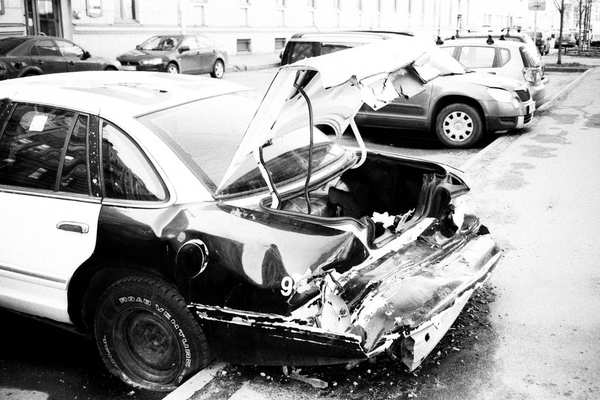
Collision car insurance is designed for a specific problem: damage to your own vehicle after a crash. If you hit another car, strike a guardrail, back into a post, or roll the vehicle, collision coverage can help pay to repair or replace your car, subject to your deductible, policy terms, and the vehicle’s value.
The key question is whether that protection is worth its premium. Compare what your car is worth, what collision adds to your premium, and the collision deductible you would pay on a claim.
What collision car insurance covers
Collision coverage generally pays for physical damage to the insured vehicle when it collides with another vehicle or an object. It also commonly covers rollover damage. Examples include hitting a parked car, striking a tree, clipping a concrete barrier, or losing control and overturning.
The coverage is for your vehicle, not the other driver’s. If you are responsible for damaging someone else’s car, that loss is normally handled by property damage liability coverage. Collision insurance also does not pay medical bills simply because they resulted from a crash.
Collision differs from comprehensive coverage. Comprehensive generally handles non-collision losses such as theft, vandalism, fire, severe weather, falling objects, and many animal strikes. Drivers seeking broad physical-damage protection often carry both.
How the collision deductible affects a claim
Your collision deductible is the amount you agree to absorb before the insurer pays the remaining eligible damage. A higher deductible can lower the collision insurance cost, while a lower deductible usually means paying more premium for less out-of-pocket expense after a covered crash.
Suppose a covered collision causes $4,200 in repair damage and your deductible is $1,000. If the claim is approved and the car is repairable, the insurer would generally pay about $3,200 and you would be responsible for $1,000. If the repair bill were only $900, a $1,000 deductible would mean there is no collision payment.
Choose a deductible you could realistically pay on short notice rather than automatically selecting the highest option. A related guide to car insurance deductibles can help when comparing policy choices.
What happens if the car is totaled?
Crash damage insurance does not promise to repair a vehicle at any cost. When repair costs are too high relative to the car’s value, the insurer may declare it a total loss. A collision settlement is generally limited by the vehicle’s actual cash value immediately before the loss, with the deductible and policy terms affecting the final payment.
This matters with older cars. A vehicle may still be dependable while having a modest market value. If the potential insurance payment after a total loss is relatively small, paying a significant premium year after year can become harder to justify.
When collision coverage is usually worth keeping
If you finance or lease a vehicle, the lender or leasing company will usually require physical-damage coverage that includes collision. Collision itself is generally not required by state law, but a financing agreement can require it because the vehicle is collateral.
Even if you own the car outright, collision can make sense when repairing or replacing it after a crash would create a serious financial problem. A newer or higher-value vehicle leaves more value for the policy to protect. The same may be true for a modestly priced car if you depend on it for work and lack enough savings to replace it quickly.
Collision can also help when responsibility for a crash is disputed. Depending on your policy, using your own collision coverage may get the vehicle claim moving while fault is sorted out. Your insurer may later seek recovery, and your deductible may sometimes be reimbursed, but that is not guaranteed.
When dropping collision may make sense
There is no single age at which a car becomes too old for collision coverage. Instead, compare the potential benefit with the cost of keeping it. Start with the vehicle’s current market value and subtract your deductible. That gives you a rough sense of the value at risk in a total-loss scenario, although an actual settlement depends on the policy, vehicle condition, local market, and state rules.
Imagine an older car worth about $4,000 with a $1,000 deductible. The coverage is not protecting a full $4,000 because you retain the first $1,000 of a covered loss. If collision costs several hundred dollars each year, an owner with adequate emergency savings may prefer to accept that risk. A driver who could not replace the car without insurance may reasonably keep the coverage.
Before dropping it, check your loan or lease status and review the rest of the policy. A guide to comprehensive versus collision coverage can help make sure you are not confusing crash protection with coverage for theft, weather, or other non-collision events.
How to judge collision insurance cost
There is no useful universal price for collision coverage. Premiums can vary with the vehicle, location, driving history, claims history, selected deductible, mileage, and other rating factors allowed in your state. Compare quotes using the same coverage choices and look at the collision portion of each premium.
Compare multiple deductible options as well. If increasing the deductible from $500 to $1,000 saves very little, taking on another $500 of claim risk may not be attractive. If the savings are meaningful and you have sufficient cash reserved, the higher deductible may be reasonable. A guide to comparing car insurance quotes is a useful next step.
FAQ about collision car insurance
Is collision car insurance required by law?
Collision coverage is generally optional under state insurance law. However, a lender or leasing company may require it while it has a financial interest in the vehicle.
Does collision insurance cover hitting another car?
Yes. Collision coverage generally applies to covered damage to your own insured vehicle after hitting another vehicle, subject to your deductible and policy terms. Damage you cause to the other vehicle is typically handled through property damage liability coverage.
Does collision coverage pay if I caused the crash?
Collision coverage generally applies to covered damage to your own car regardless of who caused the crash. Your deductible normally still applies when you make a collision claim.
Should I keep collision on an older vehicle?
It depends on the car’s current value, your deductible, the annual collision premium, and your ability to repair or replace the vehicle without insurance. As a car loses value, compare the shrinking potential payout with the continuing cost of coverage.
Choose coverage based on the loss you can afford
Collision car insurance is most valuable when a serious crash would leave you unable to repair or replace your vehicle comfortably. It can protect a higher-value car, satisfy financing requirements, and provide a direct route to a claim after many crashes. Its value can decline as the vehicle’s market value falls and the premium and deductible consume more of the possible payout.
Before renewing, check your car’s approximate value, confirm the deductible, and identify what you are paying for collision coverage. Then ask one practical question: if the car were badly damaged tomorrow, would dropping this protection leave you financially stuck? That answer is usually more useful than any one-size-fits-all rule.