
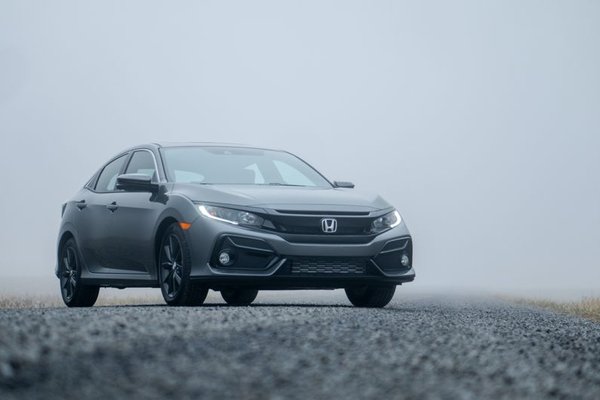
The Honda Civic makes ordinary driving feel a little less ordinary. It is easy to park, economical to run and surprisingly roomy, but its appeal goes beyond a specification sheet. For U.S. buyers shopping for a compact sedan, this Honda Civic review covers what matters after a test drive: comfort, fuel costs, technology and everyday usability. The 2026 sedan provides a reference for comparing trims.
Comfort That Works Beyond the Test Drive
The Civic’s driving position is a strength. The dashboard sits relatively low, the forward view is clear and the controls avoid unnecessary clutter. Its front seats offer good everyday support, although drivers who need adjustable lumbar support should test them carefully; that adjustment is not a strong point of the lineup.
The suspension balances a settled ride with reassuring body control. The Civic feels composed on highways without becoming excessively soft through turns. Rough pavement can create noticeable tire noise, however. If you regularly travel on concrete freeways, include a stretch at highway speed in your test drive rather than judging cabin quietness around the dealership.
Honda Civic Interior: Useful Space, Simple Controls
The Honda Civic interior has a clean, horizontal design, distinctive honeycomb-style air vents and physical controls for common functions. Materials feel thoughtfully chosen for a mainstream compact car. Straightforward ergonomics matter more during a commute than flashy screens or unnecessary menus.
The 2026 Civic sedan provides 37.4 inches of rear legroom and a 14.8-cubic-foot trunk. That is useful space for groceries, luggage and school bags. Adults can ride in back, although three across will feel cramped. Buyers frequently carrying strollers or bicycles should compare the Civic hatchback’s larger cargo opening before settling on the sedan.
Driving Feel: Gasoline Versus Hybrid
The LX and Sport sedans use a 150-horsepower 2.0-liter four-cylinder engine and continuously variable transmission. They are smooth enough for relaxed driving, but acceleration can feel modest when entering a busy interstate or passing uphill. The standard engine favors calm, predictable responses over quick bursts of speed.
The Sport Hybrid and Sport Touring Hybrid produce a combined 200 horsepower. Electric assistance gives them prompt response from a stop, making traffic feel less tiring. The hybrid retains the Civic’s precise steering and tidy handling, so better efficiency does not mean dull driving. All regular Civic sedans use front-wheel drive; all-wheel drive is not offered.
Honda Civic MPG: What the Numbers Mean
EPA ratings reveal a meaningful difference. The 2026 Civic LX returns an estimated 32 mpg city, 41 highway and 36 combined. The gasoline Sport is rated at 31 city, 39 highway and 34 combined. Both hybrid sedan trims achieve 50 city, 47 highway and 49 combined. Actual results vary with traffic, temperature, speed and maintenance.
Consider someone driving 12,000 miles annually. At the EPA combined ratings, the LX uses approximately 333 gallons of gasoline, versus 245 gallons for the hybrid. At an illustrative $3.50 per gallon, that is about $310 in annual fuel savings. Your actual benefit depends on local prices and driving conditions, so weigh the savings against the hybrid’s higher purchase price.
The hybrid is particularly appealing in stop-and-go traffic, where electric assistance and regenerative braking do more work. Predominantly highway drivers may still enjoy its stronger acceleration but should not expect to duplicate the 50-mpg city estimate. Comparing fuel-efficient compact sedans using the same EPA combined metric offers a fairer starting point.
Honda Civic Features and Technology
The Civic’s technology is approachable rather than distracting. Lower 2026 trims feature a 7-inch touchscreen; the Sport Touring Hybrid includes a 9-inch display and Google built-in. Smartphone integration is available, but wireless functions, audio equipment and charging features differ by trim. Check the specific vehicle rather than assuming every Civic has identical equipment.
Physical climate controls are welcome: temperature changes do not require several screen taps. The top hybrid trim adds more premium conveniences, including an upgraded audio system, but many drivers will find the simpler interface easier to live with. Decide which Honda Civic features you will actually use instead of paying for every available upgrade.
Honda Civic Safety and Driver Assistance
Honda Civic safety equipment includes Honda Sensing across the 2026 sedan range. Standard functions include collision-mitigation braking, adaptive cruise control with low-speed follow, lane-keeping assistance and road-departure mitigation. A rearview camera and multiple airbags are also included. Blind-spot information is fitted on Sport and higher trims, not the base LX.
These systems can reduce workload but cannot replace attentive driving. Poor weather, faded lane markings or obscured sensors can limit performance. Before purchasing, consult current IIHS and NHTSA results for the relevant model year and body style rather than assuming every Civic receives identical crash-test scores.
Which Civic Sedan Is the Best Value?
Honda’s published 2026 U.S. prices, including a $1,195 destination charge, are $25,890 for the LX, $27,890 for the Sport, $30,590 for the Sport Hybrid and $33,590 for the Sport Touring Hybrid. These figures exclude taxes, registration and options; dealer selling prices can differ. Ask for a complete out-the-door quote before comparing offers.
The LX makes sense when purchase price matters most. The Sport adds styling and convenience touches but keeps the gasoline engine. The Sport Hybrid is arguably the sweet spot because it combines better acceleration with outstanding economy. The Sport Touring Hybrid suits those who specifically want its upgraded technology and amenities.
Look beyond monthly payments. Insurance, financing, fuel, maintenance and resale expectations affect long-term costs. If you routinely carry awkward cargo, a sedan versus hatchback comparison could be more useful than another trim upgrade.
Make the Test Drive Match Your Life
Try the Civic on roads you actually use. Bring the child seat or luggage you expect to carry, check the rear door opening and see whether the trunk accepts your largest suitcase. Test parking visibility, adjust the seat fully and listen for highway noise. If possible, drive a gasoline Sport and a Sport Hybrid back-to-back; their difference in acceleration is easier to appreciate firsthand than on paper.
Frequently Asked Questions
Is the Honda Civic comfortable for long drives?
Generally, yes. Its supportive seats, composed ride and clear controls suit highway journeys. Road noise and limited lumbar adjustment may bother some drivers, so take an extended test drive.
Does the Honda Civic Hybrid need to be plugged in?
No. The regular Civic Hybrid recharges its battery using the gasoline engine and regenerative braking. You refuel it at a gas station like a conventional Civic.
Which 2026 Civic sedan has the best fuel economy?
The Sport Hybrid and Sport Touring Hybrid both earn an EPA-estimated 49 mpg combined, versus 36 for the LX and 34 for the gasoline Sport.
Is the Honda Civic a good family car?
For a small family, its usable rear seat, child-seat anchors and practical trunk make it a strong option. Check the fit of multiple child seats or a large stroller before buying.
Final Verdict
The Civic succeeds because it makes daily routines pleasant without sacrificing efficiency or practicality. The gasoline sedan is comfortable and straightforward; the hybrid adds the performance and fuel economy that make the package feel complete. If you value predictable costs, a useful cabin and responsive steering over SUV-style cargo height, the Civic deserves a serious test drive.