
A car jack is one of those tools many drivers do not think about until they badly need it. A flat tire on the roadside, a quick brake inspection in the driveway, a seasonal tire change, or a small repair under the car can suddenly make the right jack feel less like a tool and more like a lifeline. Still, not every jack is made for the same situation. Some are light and compact enough to keep in the trunk. Others are heavy, stable, and better suited to a garage floor.
Understanding different car jack types helps you choose a tool that matches your vehicle, your comfort level, and the kind of work you plan to do. A jack that works well for an emergency tire change may feel awkward for regular maintenance. A jack that is excellent in a workshop may be far too bulky to carry around. The key is not simply buying the strongest one you can find. It is choosing the one that fits the job safely and sensibly.
Why Choosing the Right Car Jack Matters
A car jack does one basic job: it lifts part of a vehicle off the ground. That sounds simple, but the risks are real. Cars are heavy, unevenly shaped, and sometimes lifted on surfaces that are less than perfect. A jack must support the vehicle at the correct lifting point and raise it in a controlled way. If it slips, sinks, tilts, or is used beyond its rated capacity, the situation can become dangerous very quickly.
This is why the type of jack matters. Vehicle weight, ground clearance, lifting height, storage space, and surface conditions all play a role. A small hatchback, a low sports car, a family SUV, and a lifted truck may each need a different approach. Even the user’s strength and experience can affect which jack feels practical.
It is also important to remember that a jack is mainly for lifting, not for holding a car while someone works underneath it. For any job that involves going under the vehicle, jack stands should be used after the car is raised. The jack lifts the vehicle; the stands support it. That small difference is one of the most important safety habits in basic car maintenance.
Scissor Jacks
The scissor jack is probably the most familiar roadside jack. Many cars come with one from the factory, usually stored with the spare wheel. It has a simple crossed-metal design that expands upward when turned with a handle or crank. As the screw mechanism rotates, the jack slowly raises the vehicle.
The biggest advantage of a scissor jack is its size. It is compact, fairly light, and easy to store in the trunk. For emergency tire changes, it does its job well enough when used correctly on firm, level ground. It also does not require hydraulic fluid or much maintenance.
The downside is effort and stability. Scissor jacks can feel slow and tiring, especially if the car needs to be lifted high enough to remove a wheel. They also have a narrow base compared with larger jacks, so they are not ideal on soft ground or uneven surfaces. For regular garage work, most people eventually want something smoother and more stable. Still, as an emergency tool, a scissor jack remains practical and widely used.
Bottle Jacks
Bottle jacks get their name from their upright, bottle-like shape. They use hydraulic pressure to lift the vehicle, which makes them much easier to operate than a manual scissor jack. A small handle pumps the hydraulic piston upward, lifting the load with less physical effort.
These jacks are popular for heavier vehicles because they often offer strong lifting capacity in a relatively compact body. Owners of SUVs, vans, pickups, and some off-road vehicles often find bottle jacks useful. They are sturdy, simple, and do not take up too much storage space.
However, bottle jacks are tall even before lifting begins. That means they may not fit under low-clearance vehicles. A sedan with a low side skirt or a sports car may not have enough room for a bottle jack to slide underneath the proper lifting point. Another thing to consider is stability. Although bottle jacks can lift a lot of weight, their upright design and smaller footprint mean they need a solid, flat surface. On a rough roadside shoulder, extra care is needed.
For drivers with taller vehicles, a bottle jack can be a strong and convenient choice. For low cars, it is usually not the best match.
Floor Jacks
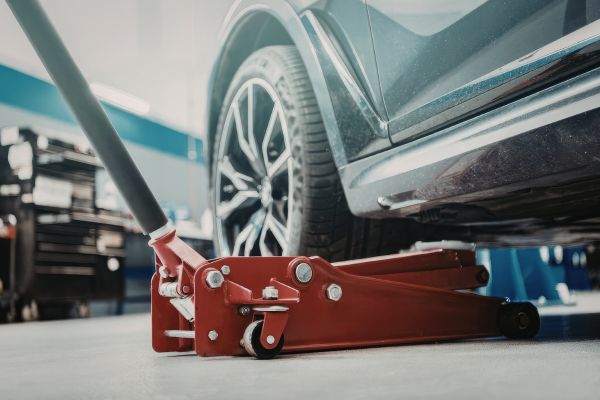
A floor jack, sometimes called a trolley jack, is the garage favorite. It has wheels, a long handle, and a low body that rolls under the vehicle. Like a bottle jack, it usually works hydraulically, but its design gives it a wider stance and smoother lifting action.
For home mechanics, a floor jack is often the most comfortable option. It lifts quickly, feels stable on a proper surface, and is easier to position accurately under factory jack points or crossmembers. The long handle gives better control, and the wheels allow the jack to move slightly as the vehicle rises, which helps reduce awkward shifting.
The main drawback is portability. Floor jacks are heavier and larger than scissor or bottle jacks. They are not something most people want to keep in a small trunk for daily driving. They also need a firm, smooth surface to roll properly. In a garage or paved driveway, they shine. On gravel, dirt, or uneven roadside ground, they can become difficult or unsafe to use.
There are different versions of floor jacks, including standard steel models, lighter aluminum versions, and low-profile designs. Low-profile floor jacks are especially useful for sports cars or lowered vehicles because they can slide under tight spaces more easily. For regular maintenance at home, a good floor jack is often the most versatile choice among common car jack types.
Hi-Lift Jacks
A hi-lift jack looks very different from the common jacks used for ordinary cars. It is tall, mechanical, and often associated with off-road driving. It can lift a vehicle much higher than a standard jack and can be useful in situations where a vehicle is stuck in mud, sand, rocks, or uneven terrain.
The appeal of a hi-lift jack is its range and versatility. Off-road drivers may use it for recovery situations, tire changes on lifted vehicles, or creating space when a wheel is buried. It can be mounted on the outside of a 4×4 and carried during trail trips.
But it is not a beginner-friendly tool. Hi-lift jacks require proper technique, suitable lifting points, and serious attention to safety. Used carelessly, they can be unstable and dangerous. They are also unnecessary for most everyday drivers. If your driving is mainly city roads, highways, and normal parking lots, a hi-lift jack is more tool than you need.
For off-road enthusiasts with the right vehicle and experience, it can be valuable. For regular car owners, it is usually not the sensible choice.
Exhaust Air Jacks
Exhaust air jacks are less common but interesting. They use a large inflatable bag placed under the vehicle, which is filled either by exhaust gases or an air compressor. As the bag expands, it raises the vehicle off the ground.
These jacks can be useful on soft surfaces where traditional jacks might sink, such as sand, mud, or snow. Because the lifting bag spreads weight over a larger area, it can work in places where a narrow jack base struggles. That makes them more relevant for off-road or remote driving than normal garage use.
Still, they come with limitations. The bag must be positioned carefully to avoid sharp edges, hot exhaust parts, or unstable lifting angles. They can be bulky to store and may not feel as precise as a hydraulic jack. For most drivers, an exhaust air jack is a specialized tool rather than a daily essential.
Electric Car Jacks
Electric car jacks are designed to reduce manual effort. They usually connect to the vehicle’s 12-volt outlet or battery and raise the car with the push of a button. Some kits also include an electric impact wrench or tire inflator, making them appealing for roadside tire changes.
The convenience is obvious. Drivers who struggle with cranking a scissor jack or pumping a hydraulic jack may find an electric model easier to manage. It can also feel less intimidating during an emergency, especially at night or in poor weather.
However, electric jacks depend on power and moving parts. If the car’s battery is weak or the motor fails, the tool becomes less useful. They also vary widely in quality, lifting capacity, and stability. Because of that, it is important to choose one that matches the vehicle’s weight and to understand how it works before relying on it during a real roadside problem.
Electric jacks can be helpful for convenience, but they should still be treated with the same safety caution as any other lifting tool.
Which Car Jack Is Best for Roadside Emergencies?
For most ordinary drivers, the best roadside jack is the one that is compact, reliable, and matched to the vehicle. A factory scissor jack is often enough for occasional emergency tire changes, provided it is in good condition and used at the correct jacking point. It is not glamorous, but it fits the trunk and does the job.
For SUVs, pickups, and heavier vehicles, a bottle jack may be a better roadside option, especially if the vehicle has enough ground clearance. It can lift more easily and usually requires less effort. However, it should be paired with a sturdy base plate if there is any chance of using it on softer ground.
Electric jacks can make roadside work easier, but they should not be treated as magic tools. Drivers should test them at home, understand their limits, and keep a backup plan where possible.
Which Car Jack Is Best for Home Garage Use?
For home maintenance, the floor jack is usually the best choice. It is easier to position, smoother to operate, and more stable on concrete than smaller trunk jacks. If you rotate tires, inspect brakes, change oil, or do light repairs, a floor jack paired with proper jack stands creates a much safer and more comfortable setup.
Vehicle type matters here too. Low cars benefit from low-profile floor jacks. Larger SUVs and trucks may need a jack with greater lifting height and capacity. A small compact car does not need an oversized heavy-duty jack, but the jack should still exceed the vehicle’s weight requirements for the end being lifted.
A garage jack is not only about lifting power. Handle length, saddle size, lift range, weight, and ease of movement all affect how useful it feels over time.
Safety Should Shape the Final Choice
No matter which jack you choose, safe use matters more than the design itself. Always lift from the manufacturer-recommended jacking points. Use the jack on firm, level ground. Chock the wheels that remain on the ground. Avoid putting any part of your body under a vehicle supported only by a jack. For repair work underneath the car, use jack stands rated for the vehicle’s weight.
It is also worth checking the jack’s weight rating before buying or using it. The rating should comfortably match the vehicle. A small jack that barely meets the requirement may technically work, but it leaves little margin. Condition matters too. Hydraulic jacks can leak, scissor jacks can rust, and electric jacks can fail if neglected. A jack stored for years in a trunk should be inspected before it is trusted.
Conclusion
The best jack is not the same for every driver. Scissor jacks are compact and useful for basic roadside tire changes. Bottle jacks offer strong lifting power for taller and heavier vehicles. Floor jacks are the most practical choice for regular home garage work. Hi-lift and exhaust air jacks serve more specialized off-road needs, while electric jacks focus on convenience.
When comparing car jack types, think less about which one looks strongest and more about where, how, and why you will use it. A daily driver may only need a dependable emergency jack in the trunk. A home mechanic will usually appreciate the control of a floor jack. An off-road driver may need something built for rough ground and unusual angles.
In the end, a car jack is a safety tool before it is a convenience tool. Choose one that suits your vehicle, learn how to use it properly, and pair it with the right support equipment when the job requires it. That way, when the moment comes to lift your car, you are not guessing. You are prepared.